


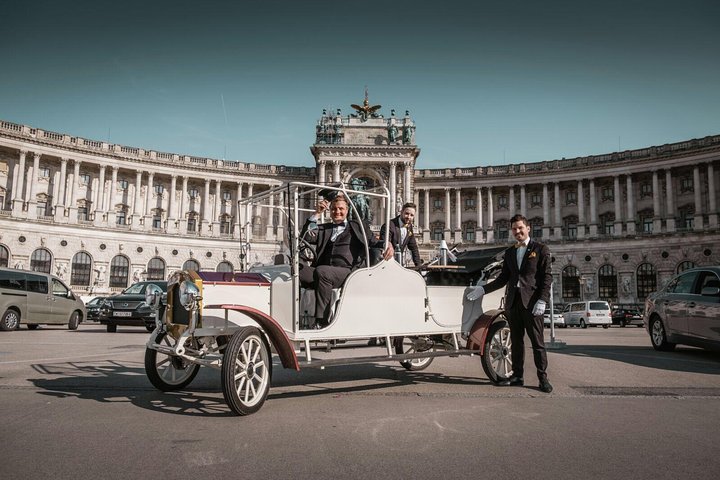


Six Centuries of Empire in One Complex
The Hofburg is not a palace in the way most visitors picture one — a single grand building with a front door and a back garden. It’s a sprawling complex of interconnected wings, courtyards, chapels, and museums that evolved over 600 years as successive Habsburg rulers added their own contributions. By the time the empire fell in 1918, the Hofburg had grown into a small city within Vienna, covering 240,000 square metres with over 2,500 rooms.
Today it serves as the official residence of the Austrian president and houses several major museums and institutions. For visitors, the challenge isn’t whether the Hofburg is worth seeing — it unquestionably is — but deciding which parts of this enormous complex to focus on and whether a guided tour adds enough value over exploring independently.
What’s Inside the Hofburg
The complex contains multiple distinct attractions, each with its own entry and opening hours. Understanding what’s available before you visit helps you plan your time rather than wandering between wings trying to figure out what’s where.
The Imperial Apartments (Kaiserappartements) are the rooms where Emperor Franz Joseph and Empress Elisabeth (Sisi) lived and worked. The 24 rooms open to the public are preserved largely as they were in the late 19th century — Franz Joseph’s austere study contrasting sharply with Sisi’s private gymnasium and dressing rooms. The apartments offer the most intimate look at how the Habsburgs actually lived, rather than how they presented themselves to the public.
The Sisi Museum occupies six rooms adjacent to the apartments and traces Empress Elisabeth’s life from her Bavarian childhood through her reluctant role as empress to her assassination in Geneva in 1898. The museum does a creditable job of cutting through the romanticised mythology that surrounds Sisi and presenting the more complex reality — a woman who was deeply unhappy in the Habsburg court, obsessively focused on her appearance and physical fitness, and increasingly reclusive as she aged.
The Imperial Silver Collection (Silberkammer) displays the Habsburg table settings, porcelain, and silverware across several rooms. It sounds dry on paper, but the scale is staggering — thousands of pieces of ceremonial tableware, a dining table set for over 100 guests, and the logistics of feeding an imperial court on display. It’s the section most visitors don’t expect to enjoy and then find surprisingly fascinating.
The Spanish Riding School is housed in a baroque winter riding hall within the Hofburg and is home to the famous Lipizzaner stallions. Performances, morning training sessions, and guided tours of the stables are available. This is a separate booking from the main Hofburg museums and operates on its own schedule.
The Imperial Chapel (Burgkapelle) is where the Vienna Boys’ Choir performs Sunday Mass during the concert season (September to June). The chapel itself is a Gothic structure dating to the 15th century. Attending Mass is free but tickets for reserved seating must be booked well in advance.
The Austrian National Library’s State Hall (Prunksaal) is one of the most beautiful baroque libraries in the world — a vast hall with ceiling frescoes, marble columns, and 200,000 historic volumes. It’s located in the Hofburg’s Neue Burg wing and is a separate admission from the main palace museums.
Guided Tour vs Independent Visit
This decision depends on what you want from the Hofburg and how much Habsburg history you already know.
A guided tour adds the most value in the Imperial Apartments and Sisi Museum, where the rooms are visually similar (ornate 19th-century interiors) and the stories behind them aren’t self-evident. A good guide will connect the rooms to the personalities — explaining why Franz Joseph kept his bedroom spartan while ruling the largest empire in Europe, why Sisi had iron rings installed in her dressing room doorframes for gymnastic exercises, and how the rigid Habsburg court protocol drove the personal dramas that shaped European history. Without a guide, the apartments are a pleasant walk through nice rooms. With a guide, they’re a window into a dysfunctional imperial family.
An independent visit works well for the Silver Collection (which has excellent signage and self-explanatory displays), the National Library State Hall (which is a visual experience more than a narrative one), and the Spanish Riding School (where performances and training sessions have their own structure). The included audio guide for the Imperial Apartments is competent but covers the same ground in less depth and with less personality than a live guide.
The ideal approach for most visitors is a guided tour of the Imperial Apartments and Sisi Museum, followed by independent exploration of the Silver Collection and whichever other Hofburg attractions interest you. This gives you expert narration where it matters most and freedom where it doesn’t.
Tour Formats Available
Standard group tours run 1–2 hours and cover the Imperial Apartments and Sisi Museum with a guide. Group sizes vary from 10 to 25 depending on the operator. These are the most affordable option and work well for visitors who want context and stories without a heavy time or budget commitment.
Small group tours cap at 8–15 people and cover the same ground with a more personal dynamic. The smaller group makes it easier to hear the guide in the sometimes-crowded apartment corridors and allows for more questions and interaction. The price premium over standard groups is modest relative to the improved experience.
Private tours dedicate a guide exclusively to your group and can be customised in focus and duration. Want to spend more time on Sisi’s story and skip the Silver Collection? Want to extend the tour to include the National Library and the surrounding Ringstrasse architecture? A private guide accommodates these preferences. These are the best option for history enthusiasts, families with specific interests, and visitors who want the flexibility to go deeper where they’re engaged.
Combination tours pair the Hofburg with other Vienna highlights — most commonly Schönbrunn Palace (the Habsburgs’ summer residence), the Ringstrasse boulevard, or a broader Vienna city tour. A Hofburg-plus-Schönbrunn combination covers both major Habsburg residences in a single day and draws useful contrasts between the formal city palace and the more relaxed (relatively speaking) summer palace.
Spanish Riding School experiences operate on a separate schedule. Morning training sessions (roughly 10:00 AM–12:00 PM, select days) let you watch the Lipizzaner stallions exercise in the baroque hall — less formal than a full performance and available without booking months ahead. Full performances are ticketed events that sell out well in advance, particularly in peak tourist season. Guided tours of the stables and training facilities are also available.
How Much Time to Spend at the Hofburg
This depends on which sections you visit, but here’s a realistic guide.
Imperial Apartments, Sisi Museum, and Silver Collection together take 1.5–2.5 hours. With a guided tour covering the apartments and Sisi Museum, plus independent time in the Silver Collection, 2 hours is comfortable. Rushing through in under an hour misses the point — the rooms need context to resonate, and the Silver Collection deserves more than a quick pass-through.
Add the National Library State Hall and you’re looking at another 30–45 minutes. It’s a single room (albeit a magnificent one) and doesn’t require much time, but it’s worth savouring.
Add the Spanish Riding School and budget 1–1.5 hours for a morning exercise session or 2 hours for a full performance.
A thorough Hofburg visit covering the main museums, the library, and a Riding School session takes a full half-day — 4–5 hours. Most visitors don’t attempt everything in one go and instead focus on the sections that interest them most.
Practical Tips
Buy a combination ticket. The Imperial Apartments, Sisi Museum, and Silver Collection are covered by a single entry ticket. The Sisi Ticket extends this to include Schönbrunn Palace and the Imperial Furniture Collection, offering better value if you plan to visit both palaces during your Vienna stay.
Start with the Hofburg, then do Schönbrunn. If you’re visiting both palaces, the Hofburg provides the political and administrative context — this is where the empire was run. Schönbrunn then shows the domestic and leisure side. Doing them in this order makes the story flow chronologically through your trip.
The Hofburg courtyards are free to walk through and are worth exploring even without entering the museums. The architecture alone — spanning Gothic, Renaissance, Baroque, and 19th-century Historicist styles — tells the story of the complex’s evolution. The Swiss Gate (Schweizertor), with its Renaissance painted arch, is particularly striking.
Photography rules vary by section. The Imperial Apartments generally allow photography without flash. The Spanish Riding School restricts photography during performances. The National Library allows photos. Check each section’s policy at entry.
The Hofburg is centrally located on the Ringstrasse and within walking distance of most major Vienna hotels and attractions. Nearest U-Bahn stations are Herrengasse (U3) and Museumsquartier (U2). Tram lines D, 1, and 2 run along the Ringstrasse past the main entrance.
Visit on a weekday if possible. Weekends bring higher visitor numbers to the Imperial Apartments, making the corridors feel cramped and the guided experience less comfortable. Weekday mornings are the quietest time.
Frequently Asked Questions
Can I visit the Hofburg without a guided tour?
Yes. The Imperial Apartments, Sisi Museum, and Silver Collection include an audio guide with general admission. The Spanish Riding School, National Library, and chapel can all be visited independently on their own schedules. A guided tour enhances the apartments and Sisi Museum significantly but isn’t required.
How does the Hofburg compare to Schönbrunn Palace?
They’re complementary rather than competing. The Hofburg is the political palace — formal state rooms, the machinery of empire. Schönbrunn is the domestic palace — gardens, personal quarters, the Habsburgs at relative leisure. Schönbrunn has more visual grandeur (the gardens, the Gloriette, the facade). The Hofburg has more historical weight. If you can only do one, Schönbrunn is the more crowd-pleasing choice; the Hofburg is the more intellectually rewarding one.
Is the Spanish Riding School worth visiting?
If you have any interest in horses or classical equitation, the morning exercise sessions are a highlight of Vienna. Watching Lipizzaner stallions train in a 300-year-old baroque hall is a unique experience. Full gala performances are more formal and expensive but spectacular. If horses aren’t your thing, the time is better spent elsewhere.
Are Hofburg tours suitable for children?
The Sisi story engages older children and teenagers — court drama, obsessive beauty rituals, assassination — but the Imperial Apartments are a series of ornate rooms that younger children may find repetitive. The Spanish Riding School holds children’s attention much better. For families, a short private tour focused on the most visually engaging rooms, combined with a Riding School visit, is the best approach.
When is the best time to visit?
Weekday mornings offer the thinnest crowds and most comfortable viewing conditions. The Hofburg is an indoor attraction, so weather doesn’t affect the experience — making it an excellent choice for rainy Vienna days. If you’re attending a Spanish Riding School performance or Vienna Boys’ Choir Mass, those have fixed schedules that will dictate your timing.