




Vienna at Your Own Pace, With Someone Who Knows It
Vienna is a city that rewards depth. The surface-level version — Schönbrunn Palace, St. Stephen’s Cathedral, a Sachertorte, done — is fine, but it barely scratches what makes the city extraordinary. The coffeehouses, the hidden courtyards of the Innere Stadt, the tension between imperial grandeur and the radical modernism that emerged from it, the musical heritage that goes far beyond Mozart souvenirs — all of this is best accessed with a guide who can tailor the experience to what interests you rather than cycling through a fixed itinerary designed for the widest possible audience.
A private Vienna tour gives you that flexibility. One guide, your group, your interests, your pace. It’s the format that turns a good city visit into a great one, and in a city as layered as Vienna, the difference is significant.
What Private Tours Offer That Group Tours Don’t
The practical advantages of a private tour are straightforward: no strangers setting the pace, no waiting for a group of 25 to regroup at every corner, and no guide delivering a lowest-common-denominator narrative that skips the content you’re most interested in.
But the real advantage is customisation. A private guide will shape the route, the commentary, and the emphasis around your group’s specific interests. Travelling with a music enthusiast? The tour can lean into Beethoven’s apartments, the backstory of the Vienna Philharmonic, and the acoustics of the Musikverein. Interested in Habsburg history? Your guide can thread the political intrigues, marriages, and downfall of the dynasty through every building you pass. Fascinated by Vienna’s coffeehouse culture? The tour becomes a walking conversation about the intellectual movements that germinated in specific cafes, with stops at establishments that locals actually use rather than tourist traps.
This adaptability is what makes a private tour worth the premium. You’re not paying for exclusivity as a luxury — you’re paying for relevance. Every minute of the tour is spent on things your group cares about, which simply isn’t possible when a guide has to satisfy 20 different sets of interests simultaneously.
Common Private Tour Formats
City overview walking tours run 2–4 hours and cover Vienna’s historic centre on foot. A typical route threads through the Innere Stadt (the old town within the Ringstrasse), taking in St. Stephen’s Cathedral, the Hofburg complex exterior, Graben and Kohlmarkt (Vienna’s grand boulevards), the Albertina area, and the lesser-known courtyards and passages that connect them. These are the best starting point for first-time visitors — your guide gives you the map of the city, both physical and historical, that frames everything else you’ll see during your stay.
Palace-focused private tours centre on the Hofburg, Schönbrunn, or both. At the Hofburg, a private guide takes you through the Imperial Apartments and Sisi Museum with commentary tailored to your interests. At Schönbrunn, you’ll cover the palace interiors and gardens with the flexibility to spend more time in areas that engage you — the private rooms, the orangery, the Gloriette viewpoint — rather than following a fixed route at group pace. A combined Hofburg-and-Schönbrunn private tour is a full half-day but covers the complete Habsburg domestic story.
Themed private tours focus on a specific strand of Vienna’s identity. Music tours visit the residences, performance venues, and haunts of Mozart, Beethoven, Strauss, and Mahler. Art tours take in the Secession building, the Belvedere (home to Klimt’s “The Kiss”), and the MuseumsQuartier. Jewish heritage tours explore the history of Vienna’s Jewish community, from the medieval ghetto to the Judenplatz memorial. Food and coffeehouse tours combine walking with tastings at bakeries, wine taverns (Heuriger), and historic cafes. These themed formats are where private tours deliver the most value — a specialist guide on a subject you care about is an incomparably richer experience than a general overview.
Full-day private tours run 6–8 hours and combine city highlights with outlying attractions. A common format covers the historic centre in the morning, breaks for lunch (often with a guide-recommended restaurant), and visits Schönbrunn or the Belvedere in the afternoon. Some extend to the Vienna Woods, the Danube riverside, or the Wachau Valley wine region. These are ideal for visitors with limited time who want to cover maximum ground with expert context throughout.
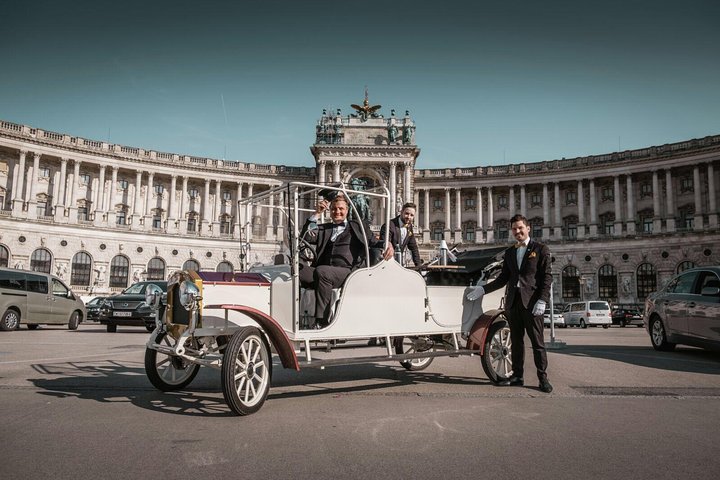
Private driving tours use a vehicle (car, minivan, or occasionally a vintage car) to cover distances that walking can’t. These are particularly useful for visiting Schönbrunn (4 kilometres from the city centre), the Belvedere, Hundertwasserhaus, and the Prater without relying on public transport. For visitors with mobility limitations, a driving tour with strategic walking stops is the most accessible way to experience Vienna comprehensively.
Choosing the Right Guide
In Vienna, guide quality varies more than in most European cities because the subject matter is so deep. A guide who’s excellent on Habsburg political history may be less engaging on the musical heritage, and vice versa. Matching your guide to your interests produces a meaningfully better experience.
Look for specialist knowledge. If you’re booking a music-themed tour, your guide should have genuine musical training or deep knowledge of Vienna’s compositional history — not just the ability to point at buildings and recite dates. If Habsburg history is your focus, a guide with a background in history or art history will provide layers of insight that a generalist can’t.
Reviews matter, and guide names matter more. Many operators let you see which guide is assigned to your tour. Repeated positive mentions of a specific guide by name in reviews are the strongest signal of quality. Some visitors specifically request guides they’ve read about — this is worth doing if you find a name that resonates.
Language fluency goes beyond translation. If you’re booking a tour in English, look for guides who are fluent enough to tell stories, make jokes, and handle unexpected questions naturally — not just translate facts from German. Vienna has an excellent pool of multilingual guides, but the difference between technically competent English and naturally engaging English is the difference between a lecture and a conversation.
Communicate your interests in advance. Email the operator or guide before the tour with a brief note about what your group is most interested in, any sites you’ve already visited, and how much walking you’re comfortable with. A good private guide will adjust their preparation based on this — it’s one of the core advantages of the format, so make use of it.
When to Book a Private Tour in Your Vienna Itinerary
Day one or two is ideal for a city overview. A private walking tour early in your trip serves as orientation — you’ll understand the city’s layout, know which areas you want to return to independently, and have recommendations from a local for restaurants, cafes, and lesser-known sites for the rest of your stay.
Mid-trip works best for themed or palace tours. Once you have the general context from your overview, a focused tour on music, art, or Habsburg history adds depth to the framework you’ve already built. Visiting Schönbrunn or the Hofburg with a guide after you’ve already walked the city centre independently means you arrive with questions and context rather than starting from zero.
Your last day can work for a relaxed format. A private food and coffeehouse tour, a leisurely drive through the Vienna Woods, or a final morning walk through your favourite neighbourhood with a guide who can fill in the gaps you’ve noticed — these are low-pressure formats that cap a Vienna trip well.
Practical Tips
Agree on the itinerary outline in advance but leave room for flexibility. The best private tours have a planned route with built-in flexibility to linger, detour, or skip sections based on how the day unfolds. Overly rigid itineraries defeat the purpose of going private.
Wear comfortable walking shoes. Vienna’s Innere Stadt is compact but cobblestoned, and a 3-hour walking tour covers more distance than most people expect. The Schönbrunn gardens alone add significant walking if the weather is good.
Factor in cafe stops. Vienna’s coffeehouse culture isn’t a tourist gimmick — it’s a genuine part of daily life. A good private guide will build in a coffee stop at a worthwhile cafe, which doubles as a rest break and a cultural experience. Don’t rush past it.
Tipping your guide is customary. Private guides in Vienna appreciate tips reflecting the quality and duration of the experience. It’s not obligatory but it is the norm, particularly for multi-hour or full-day tours.
Book in advance for peak season. Vienna’s best private guides are in high demand during the summer months (June–September) and the Christmas market season (late November–December). Booking 2–3 weeks ahead ensures you get your preferred guide and time slot. Off-season bookings are easier to arrange on shorter notice.
Frequently Asked Questions
How much does a private Vienna tour cost?
Private walking tours typically start at a flat rate for groups of up to 4–6 people, with the rate increasing for larger groups or extended durations. Per person, the cost decreases as the group grows. A private tour for a couple is a premium experience; for a group of 6, the per-person cost approaches that of a quality small-group tour with significantly more personalisation.
What’s the ideal duration for a private Vienna tour?
For a city overview, 3 hours covers the historic centre comfortably. For a themed tour (music, art, food), 2.5–3 hours gives enough depth without exhaustion. A Hofburg or Schönbrunn palace tour runs 2–3 hours. A comprehensive full-day tour covering multiple areas and attractions runs 6–8 hours with a lunch break. Match the duration to your stamina and interests — longer isn’t always better.
Can a private guide take us inside museums and palaces?
Yes, for most Vienna attractions. Licensed guides can accompany you inside the Hofburg, Schönbrunn, Belvedere, and other major sites. Entry tickets are usually arranged by the guide or operator as part of the tour booking. Some sites (like the Schönbrunn interior) have specific rules about guided groups, so your guide will manage the logistics.
Are private tours available in languages other than English and German?
Vienna has a strong pool of guides speaking French, Spanish, Italian, Mandarin, Japanese, Russian, and several other languages. Availability varies, and guides in less common languages may need to be booked further in advance. Specify your language requirement when booking.
Can I book a private tour that includes a concert or performance?
Some operators offer packages that combine a private city tour with tickets to a Vienna Philharmonic concert, a State Opera performance, or a Schönbrunn Palace concert. These are typically booked as a package with separate concert tickets — the guide covers the city tour component and provides context about the musical venue and programme. Concert availability is seasonal and sells out independently of the tour, so book early if this interests you.